
By Joseph Romano
Spoilers Ahead!
One’s justification can often do more harm than his or her misdeeds, especially when said justification is being levied upon oneself. In America, the breeding ground of opportunity, something much more vile can arise when the pressures of unbridled capitalism take hold. Ambition can be the death of moderation and when such temperance is disregarded a dangerous scenario might take effect.
The educational system has become mired in a state of reliance upon finance, as giddy school board members boast about the booming real estate prices brought upon by a prosperous school system. In Bad Education the board allows their prestigious reputation to collapse around them, just as the school was rotting from the inside out. The focus was on the $7.5 million Sky Walk, a flashy yet ultimately gratuitous feature, while the literal ceilings of the building were rotting from water damage.
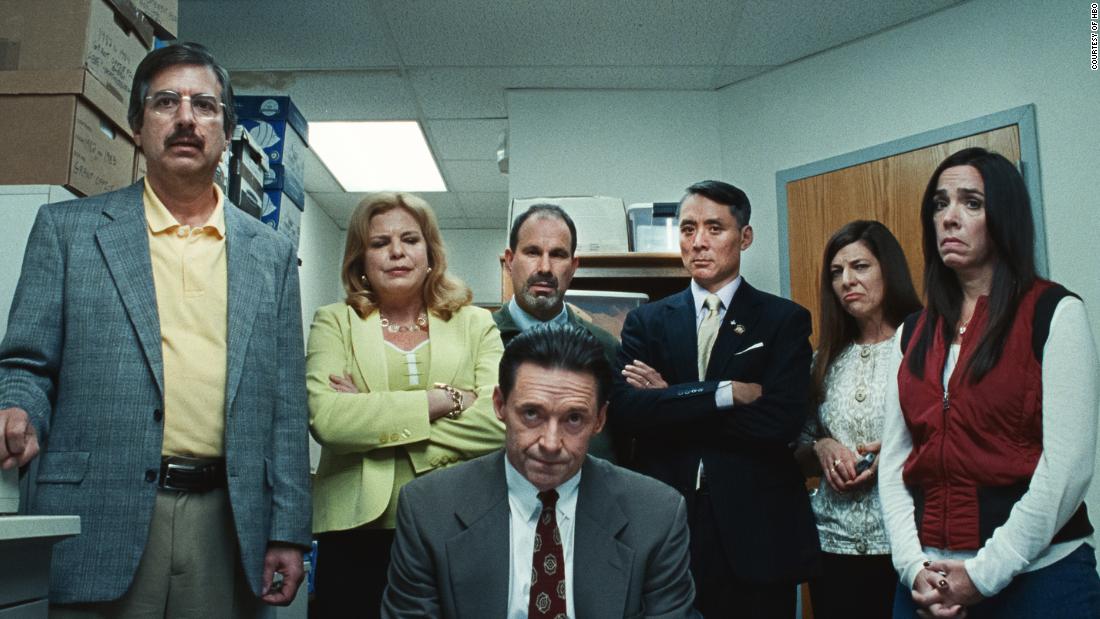
The board, helmed by Bob Spicer (Ray Romano), had become hypnotized by the flowing of acceptances to esteemed – and Ivy League – universities and the rank of the fourth most profitable school in the country. For superintendent Frank Tassone (Hugh Jackman) the dream was number one and nothing else. He craved the applause, the love that would be showered upon him, and just as his ambition his greed knew no bounds.
The film frequently beckons the question of what corruption is and furthermore who is complicit. Who is worse the one that manipulates the faulty system to his or her will or the ones who save themselves or their reputation by turning a blind eye? But, the challenge of Bad Education is determining whether or not we can sympathize with a person who knowingly stole millions from oblivious taxpayers. Maybe, in the end, it’s not enough, but for a moment Cory Finley’s deft direction and Mike Makowsy’s cuttingly sharp screenplay force you to ponder this.

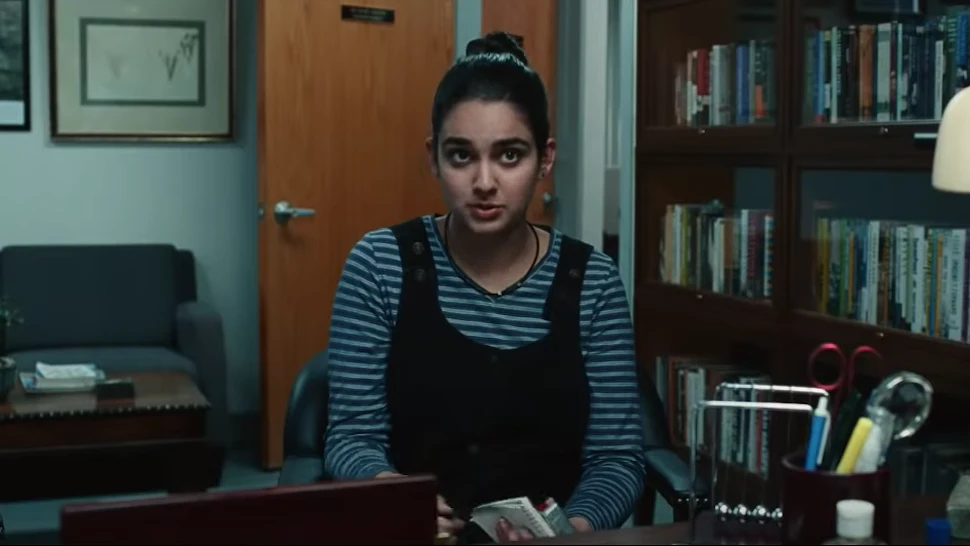
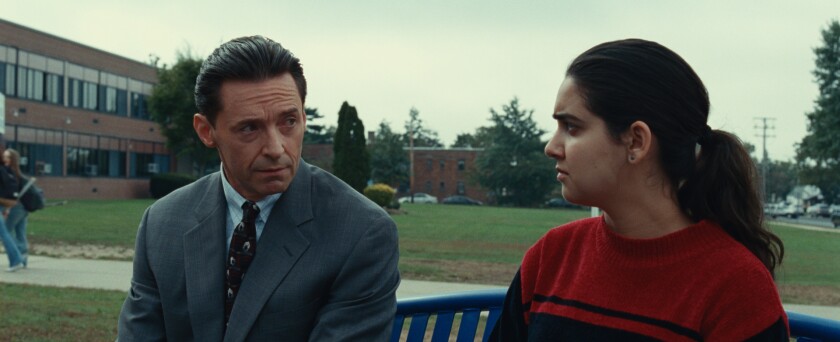
The camera glides from scene to scene, not flashy, but subtlety condemning the people who want you to like them. Tassone appears to be a really upstanding guy. He always is available to listen to students, encourages Rachel Bhargava (Geraldine Viswanathan) to not dismiss her writing as a simple ‘puff piece’, leads parents’ book club meetings, and tries to know everyone on some level. He even does so with genuine enthusiasm. His partner in crime, Pam Gluckin (Allison Janney), is much more reserved yet together they combined to rob the school district and taxpayers of upwards of $11 million. Perhaps there were signs there, but why would anyone question this when Roslyn High School ranked as the fourth-best in the country and quickly ascending, destined for the top spot.
The impressive part about Makowsky’s script, its defining feature if you will, is its patience to allow the story to evolve. There is always a sense of understated anxiety and tension lingering just below the surface level. It always feels as if it is just about to boil over, yet never truly does, therefore, remaining very grounded. This dull, nagging pressure is a representation of what the characters of this film – especially Frank – experience on a day to day basis in an attempt to straddle the line between personal gain and the betterment of the school.
Frank and Pam represent the alignment of these two factors, but Bob Spicer is not too far from them either. He has become enchanted over the bubbling reputation of Roslyn High School and the subsequent skyrocketing of real estate prices, which is far more enticing to him than the minute details of administrative operation. After all, Frank and Pam’s partnership steered him to his million-dollar mansion.
One would be remiss in not further delving into Frank, whose heavily guarded disguise deteriorates until there is nothing left. He lived under the guise of a dead wife for over thirty years in attempt to firmly remain in the closet. He adorns himself with the most expensive suits, facelifts, and first-class tickets, yet he lacks the luxuries that all the other board members flaunt about. When he reaches his emotional boiling point there is no stopping the pent-up rage that Frank has kept under wraps for years.
He starts seething and goes on a diatribe against a parent dissatisfied with her son’s placement, after failing to pass an exam and place where she had hoped twice and, of course, levying blame upon the teacher. He declares, “you don’t want to see us as people because that is not convenient for you. You just leave us behind at will… You might forget [us], but we don’t. We never forget. Ever.” This is not just a channeling of rage and frustration, but a philosophy for Frank Sassone. He knows everyone’s name, writes them letters of recommendation, and tries to care – even when others don’t.

This is a perfect example of the balance that Finley strikes in Bad Education. As obviously egregious as Frank’s actions might have been, the film can’t help but to get you to consider maybe he is worthy of your sorrow. Everyone has felt a desire to attain something, no matter how frivolous, and we all strive to achieve fulfillment in what we do. Still, we will not all reach the heights that we build up in our minds. Frank was almost there, yet an internal hollowness was still lingering. The frustration of living a life behind a disguise, hidden away, his true nature invisible. He cared, perhaps too much, and that was his downfall.
He encouraged Rachel, an aspiring journalist, to never settle – her article would only be a puff piece if she made it so. At the same time, this inherently human search for inner peace was coupled with unbridled greed. He perpetrated his crimes, deceiving those he worked with, in the same manner, he hid his true self. The narrative structure with which the plot unfolds leaves the viewer constantly uncertain. Who is wrong and who is right? What is the extent of these crimes? It is paralleled by the way Frank talks with others, when he is threatened, he begins to manipulate mercilessly. In some cases, even frighteningly.
There are so many layers of depth with which Finley and Makowsky have embedded Bad Education. It questions to what degree those who are complicit are responsible while creating a sense of empathy for Frank and Pam. In a way, they are making the audience complicit by extension, by trying to understand these flawed people we are detracting from their crimes. That is the oxymoron of it.
Upon the credits no one will walk away believing Frank was wronged, his actions were clearly heinous. Yet, at the same time, they are not beyond comprehension. He was flawed, like everyone else, it’s just that his flaws robbed unwitting people out of millions of dollars. Most of us cannot claim to be culpable in such sweeping calamity.

 The Daily Review