By Joseph L. Romano
Game of Thrones remolded itself from a show defined by subtlety into one created for the casual fan. This is not a criticism, it is a retrospective of sorts, discussing the way in which the show of its generation defied its roots in favor of a wider audience.

Show runners David Benioff and D.B. Weiss reshaped their story after they passed the source material of George R.R. Martin. They created an entity that was massively profitable because they had an established base. Their story had not won this base, however, as the subtle intrigue of 4 seasons of political drama with rapid narrative twists should be attributed to Martin.
Weiss and Benioff began their story in Season 6, for the most part, when the show essentially surpassed any book material. Their show was devoid of such subtlety in favor of a much more easy form of story telling, one centered around excitement. The invigorating thrill of beloved characters being saved from death at the last moment or the spectacle of menacing dragons reaping destruction and a seemingly indomitable struggle against the forces of death itself are among the many uses of excitement as a key element.
When the objective of the writers is to provide such a spectacle, as many viewers react in an astoundingly positive way, they begin to place their focus here. They could not grasp that fans were not just attracted to the shock of the Red Wedding (“Rains of Castamere” S3E9) or the execution of the main protagonist (“Baelor” S1E9), but rather to the build up. The build up developed these characters as humans in a realistic society, where their personal flaws cause them to act in the, sometime quizzical, way that they do.
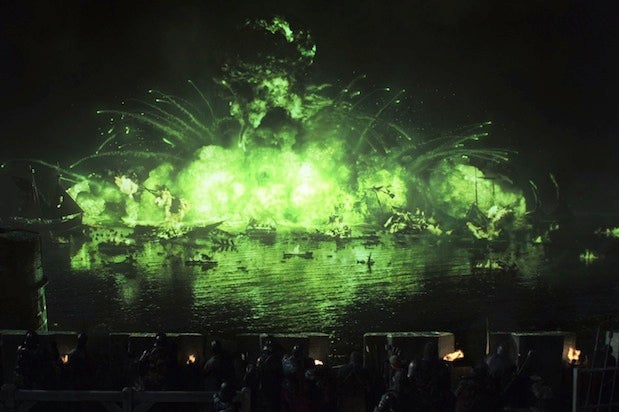
A subversion for the sake of subversion is not proper storytelling, a subversion born from logic on the contrary not only provides a momentary thrill, but also draws the members of the audience in even further. Viewers do not want to see the characters that they have come to care for die horrible deaths born from treachery. Yet, when he or she looks back upon the happenings and understands that the events that unfolded before their eyes were all provided to them, a show’s audience is solidified. A viewer will realize that the mistakes of their beloved characters have consequences. By this understanding one comes to the realization that this show is unlike any other.
This show plays along the tropes that characterize most fantasy and fiction- prophecy with implications, the hero’s journey, the wholly evil villain- and defies them by placing the events within a world that seems like the viewer’s own or one firmly rooted in real world history. The story unfolds in a logical manner in which mistakes are deadly and nothing is lasting. Moral characters can act outside of themselves for personal reasons, good people make bad decisions, antagonists have motivations that the audience can comprehend, and the audience is left to make determinations for themselves. Clear turns in a character arc do not require excessive symbolism to reinforce it and viewers can clearly grasp why the characters they care about are doing awful or ill-advised things.
The final three seasons of Game of Thrones subvert the audience’s expectations in a narrative sense. The characters’ actions no longer have the same consequences, characters take actions outside of their characters for reasons that cannot be deciphered, and villains are no longer given the proper motivation to be seen as flawed people. Logic is no longer the force that dictates the choices of the writers, they made a conscious decision to choose emotion as the impetus for the plot’s occurrences. When a show chooses emotion over logic, they are choosing the immediate high upon first viewing that evaporates over time. The choice has turned the show from a narrative into an event.
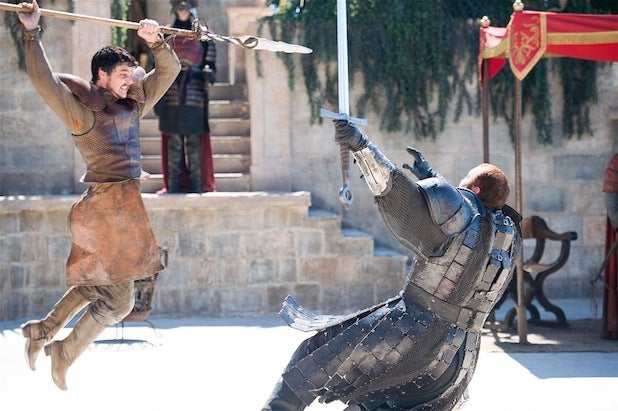
Both of these forms have merits, yet the initial fanbase fell in love with one show and have come to find another in its place. A show written with the intention of spectacle and shock value. Dave and Dan’s fatal flaw is that they misinterpreted fan reaction to the show’s biggest moments as reactions to the moments alone and not those moments in accordance with everything that preceded it. It continued in seasons 6 and 7, with much positive reaction due to the set up of previous seasons. Yet season 8 features only spectacle with no true story- most likely due to a rushed 6 episodes following a rushed season 7 of 7 episodes.
The entire fandom is coming together at once to realize that the show changed once it passed the books. The longer run times of seasons 5 and 6- 10 episodes- greatly covered for this, but it all came to a head once the insistence on spectacle in seasons 7 and 8 pushed out any hope of a truly logical plot. Most people came to dislike this new show, without realizing this change was in process for many years.
The new show features breathtaking action and visuals, yet at the same time it all felt a bit soulless. The characters are making uninspired decisions solely for the sake of the plot. The viewer is left expecting more and that more simply became pushed and pushed until it all amounted into a massively disappointing final season for many. Their hopes and desires for the show were all pinned on season 8, having been left out of some of the preceding seasons, therefore their reaction is what it was. Disappointment is born of expectations and there was a misunderstanding between the creators and the fanbase in terms of what those expectations were.
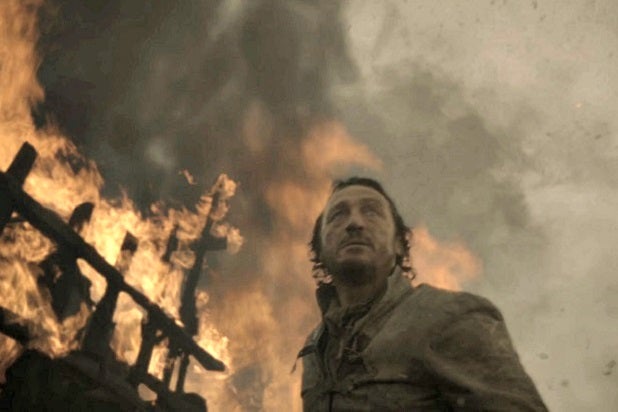
The largest complaint that can be levied towards the writers is that, beginning towards the end of season 6, there was an unmitigated rush to complete the show in a small space of 13+ episodes. Upon viewing season 6, there seems to be an uncharacteristic amount of events and spectacle in the last three episodes. “Battle of the Bastards” (S6E9) AND “The Winds of Winter” (S6E10) are fantastic examples of just how the new show succeeded. It was breathtaking spectacle that made complete sense in the confines of the character. Character moments that are not only logical, but further the storyline litter these two episodes.
On the contrary “No One” (S6E8) fails in this regard. It continues a simply illogical path set upon by episode 7 “The Broken Man.” Arya, someone that had betrayed an order of assassins, was walking in broad daylight after committing actions that would have placed her in peril. She is then promptly stabbed multiple times and survives after plummeting into filthy canal water. That is beside the point, however. The larger point is that such an obvious mistake by a fan-favorite character did not cost her much in the spectrum of events. In the first four seasons she would have either been killed or her character would have been irrevocably changed by such a traumatic event. Rather by defeating her nemesis-The Waif- and using her assassin skills, she becomes an arrogant and merciless killer. A role that does not suit her character well.

Similar flaws penetrate the following two seasons, as people acting out of character dictate their future actions. This is not a strong enough base for a logical set up and a satisfying conclusion. The writers did not allow themselves to set the characters upon these paths to reach the desired destination. The self-imposed lack of time has placed constraints in which only a limited amount of story and spectacle can be provided with the overarching goal of a logical and emotionally resonant conclusion. The writers favoritism towards spectacle thus prevented any meaningful set up from being included because there was no space for it.
The leaning away from subtlety did not topple the trend of fan opinion, the combination of a rushed final two seasons and a focus on emotion and spectacle has swayed nearly the entire fan base against the writers. It is not as much of a failure in the concept of storytelling, but rather a forced emphasis on the wrong aspects of the fandom born from a fatal misunderstanding of it. One cannot write by catering to the fans, he or she must only focus on telling a logical and compelling story and the audience will surely follow.

 The Daily Review